How good is the performance of mobile phones, and how power efficient are they?
I have already compared performance/efficiency of architectures with each other. How are mobile phones doing?
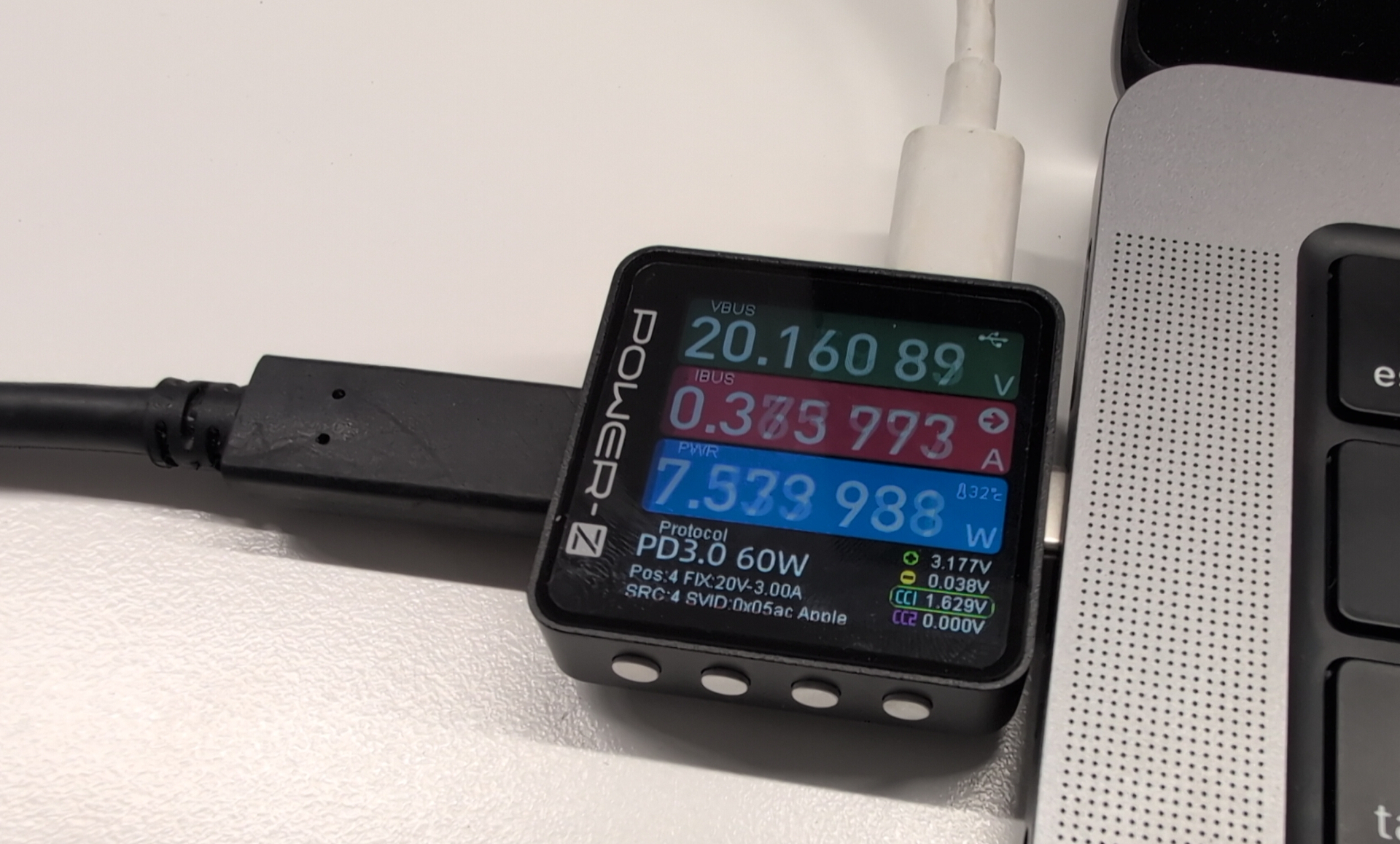
The device enabling me to measure this: the Power-Z USB meter. It’s around 100$, but has a native Linux driver. Together with Performance Co-Pilot and the scripts I used in the past, I looked at these mobile phones:
- Huawei P20 lite (2018), cpu: 2 x Cortex-A53 @ 2.36GHz
- Pixel 4a (2020), cpu: 2x2.2GHz Kryo 470 Gold + 6×1.8GHz Kryo 470 Silver
- Pixel 9 (2024), cpu: 1x3.1GHz Cortex-X4 + 3x2.6GHz Cortex-A720 + 4x1.9GHz Cortex-A520
How to get a shell on mobile phones?
I installed Termux for this. The version from F-droid turned out to old, I used a release from the github site. After installing, you get a shell running as a user. This worked out nicely on my 2 Pixel phones running GrapheneOS, and the Huawei running Emui, which is Android 9 based.
My workload was again uncompression of bzip2 data, like in the past. A detailed description is in this article.
Running the workload on Android, I had to take extra care of Android not prioritizing the workload down or even freezing it.
Results
Number of total extractions, Linear and Logarithmic scale:
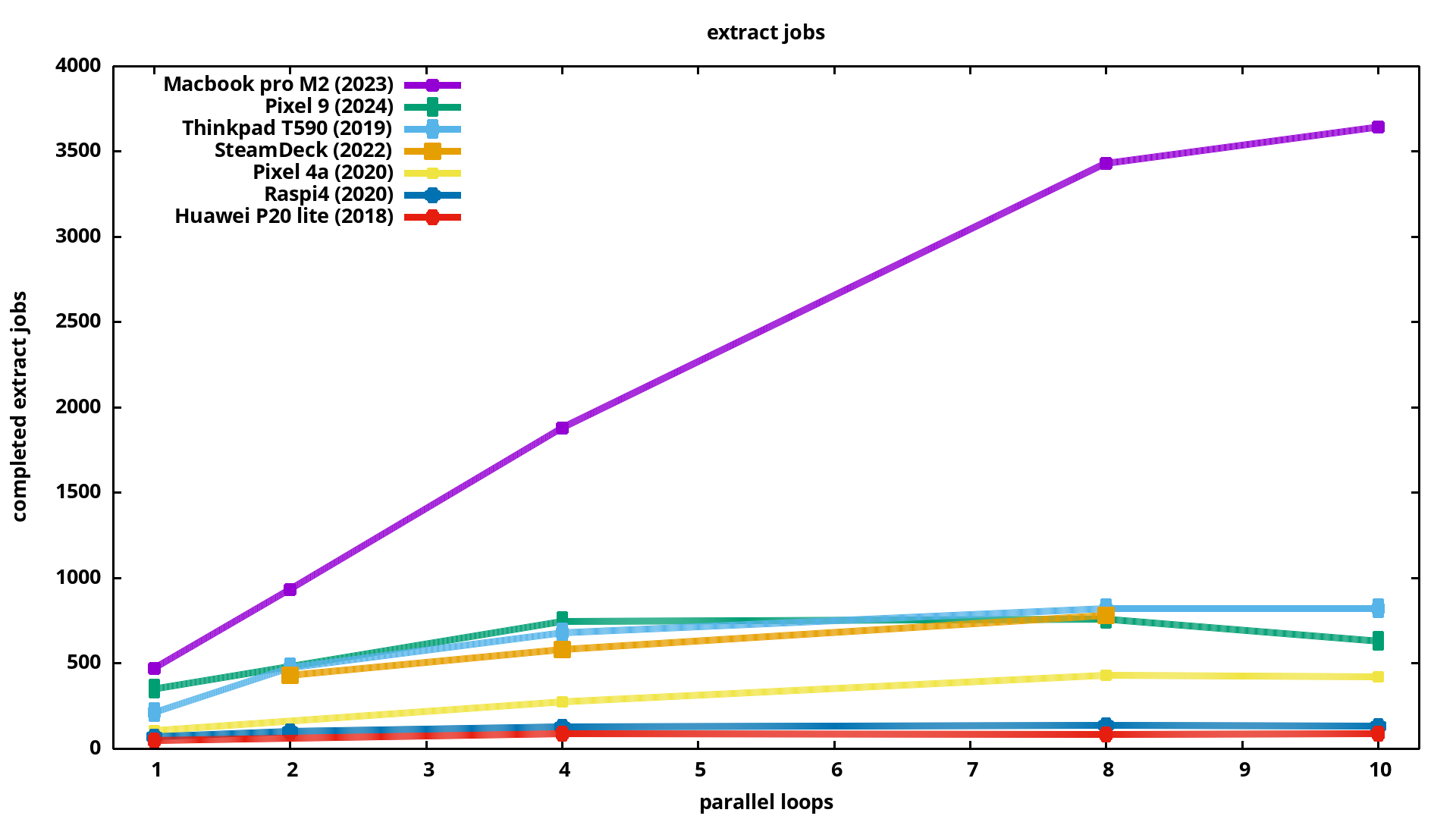
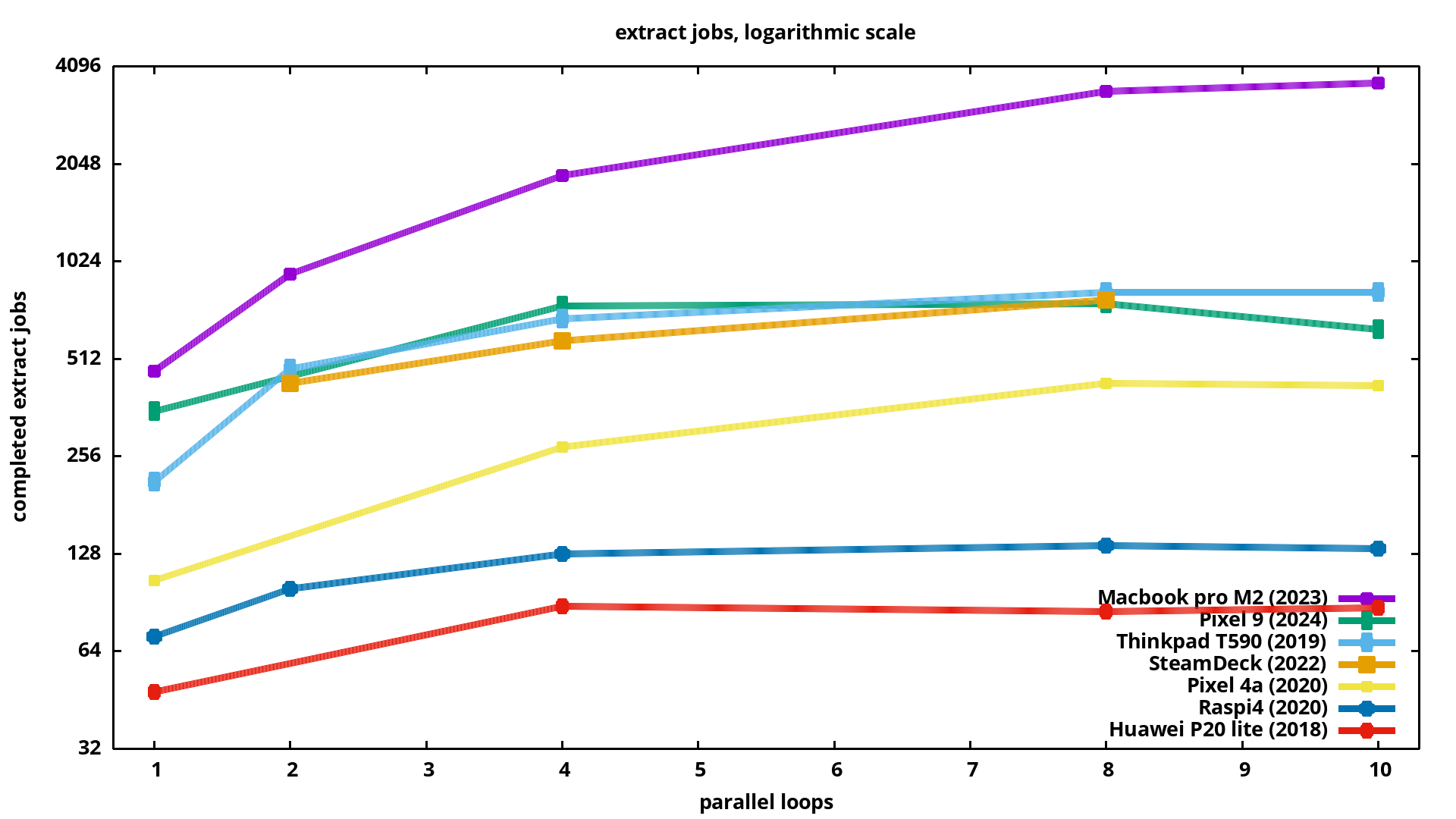
We have many single jobs running in separate threads, so we see nicely how overall job number increases with increasing thread number, as long as the system has free cores to put the threads on.
Consumption per single extraction:
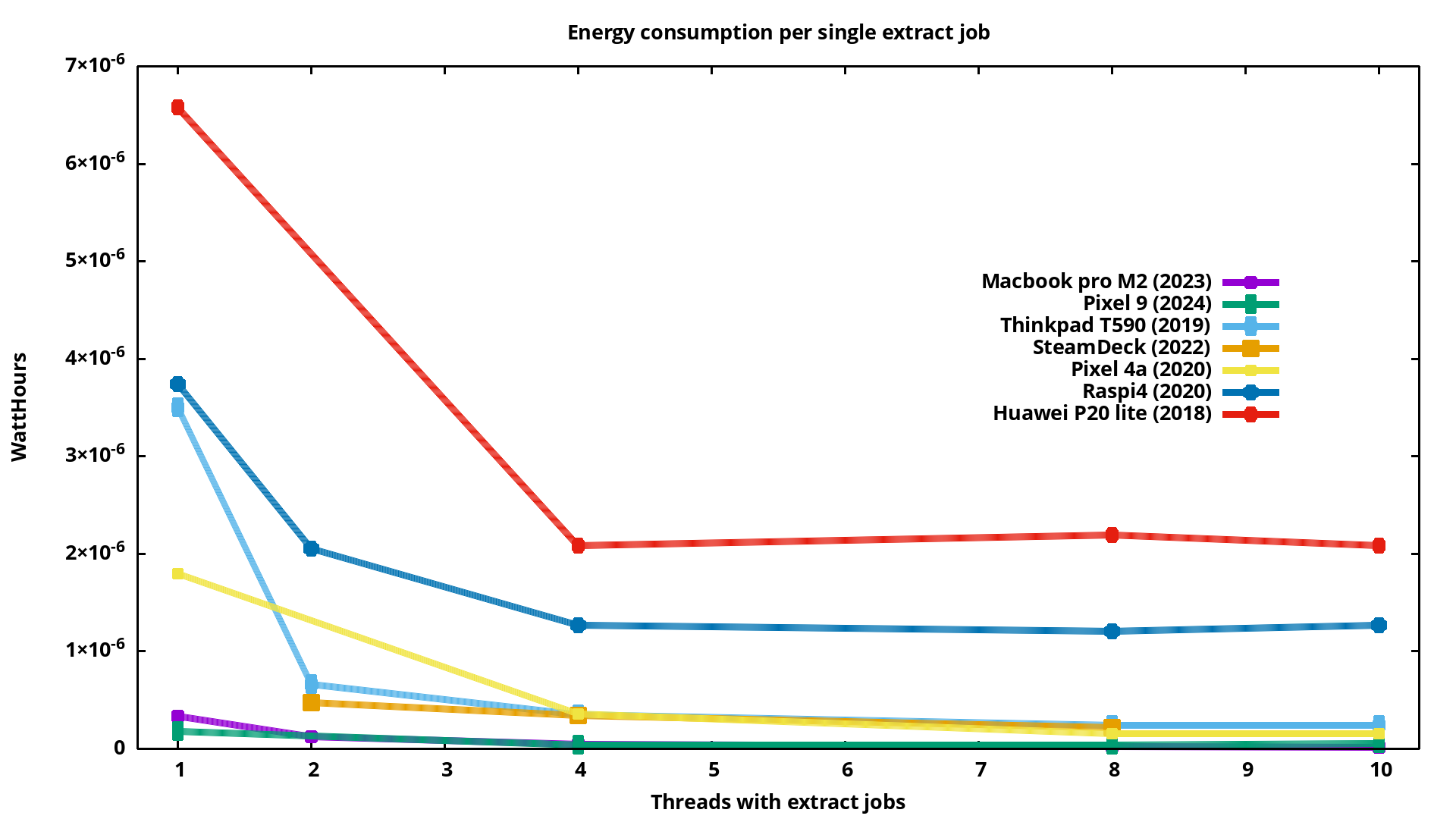
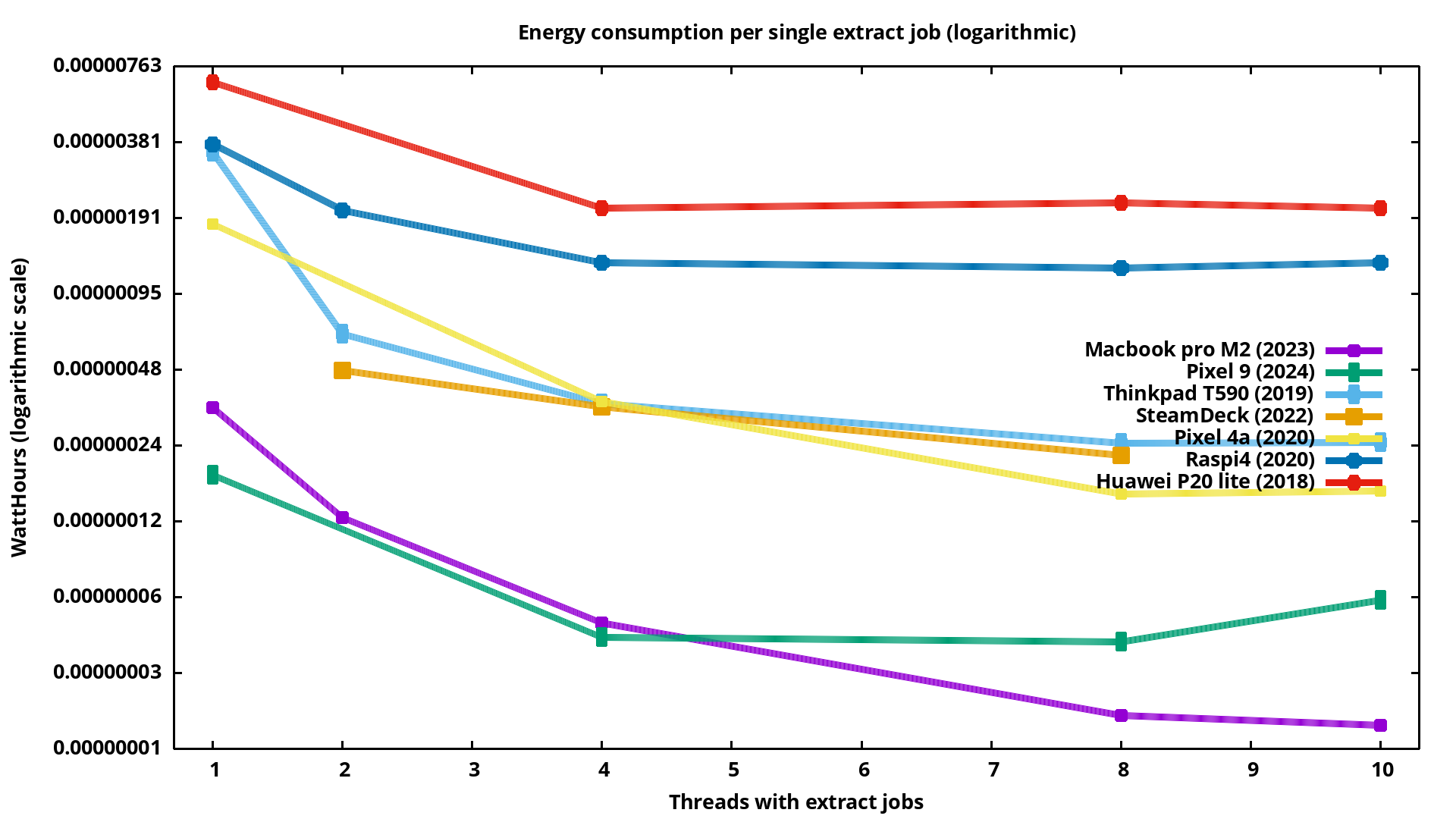
Pixel 9 and Macbook pro M2 are the winners - I did not have current x86 systems around for comparison.
Corrections? Questions? -> Fediverse thread.