Remembering Blinry’s Fifty Things you can do with SDR, I thought that something like that for HAM Radio should exist - so here is my attempt of a collection. HAM Radio is a huge field, and most radio amateurs I know are interested in one of multiple of these fields. There is overlap between the areas, and room for discussion of what’s worth getting called out in this context.
I’m trying to use rather easy to understand terms instead of HAM terms.
Understanding the Physics and Building equipment
It started with the discovery of the physics of electromagnetic waves, and transmission without cable. With that knowledge, receivers, senders, antennas and more could be constructed - so these were the first fields of interest for HAMs. With the frequency spectrum getting more used, and also for important services, also regulation started: you could either use equipment which was officially certified by the government, or you needed to pass an exam bevore sending on HAM radio frequencies. The right to built and use equipment on your own is still as of today an important right for radio amateurs. So doing exactly that is interesting for many people, as well as contructing antennas and various transmission lines, and other equipment.
The knowledge in all of these areas is constantly growing: the exam is confirming knowledge from various areas like regulations, law, physics and electronics. Based on that, new things get discovered, are from then on taught to the HAMs, and on that base the cycle continues. It’s really the feeling of ‘standing on the shoulders of giants and seeing farther’.
The ‘right to use own equipment’ is a bit different depending on the country: in Germany, in passing the exam you have shown knowledge to build equipment which can operate following the laws/allowed specs. In Japan, you additionally have to register the specific device you want to use: either a radio transmitter from a big vendor - where the vendor obtains an official device-permission after the government running various tests. Or for your homebrew equipment: also that has to be checked by the government.
Mastering Morse Code
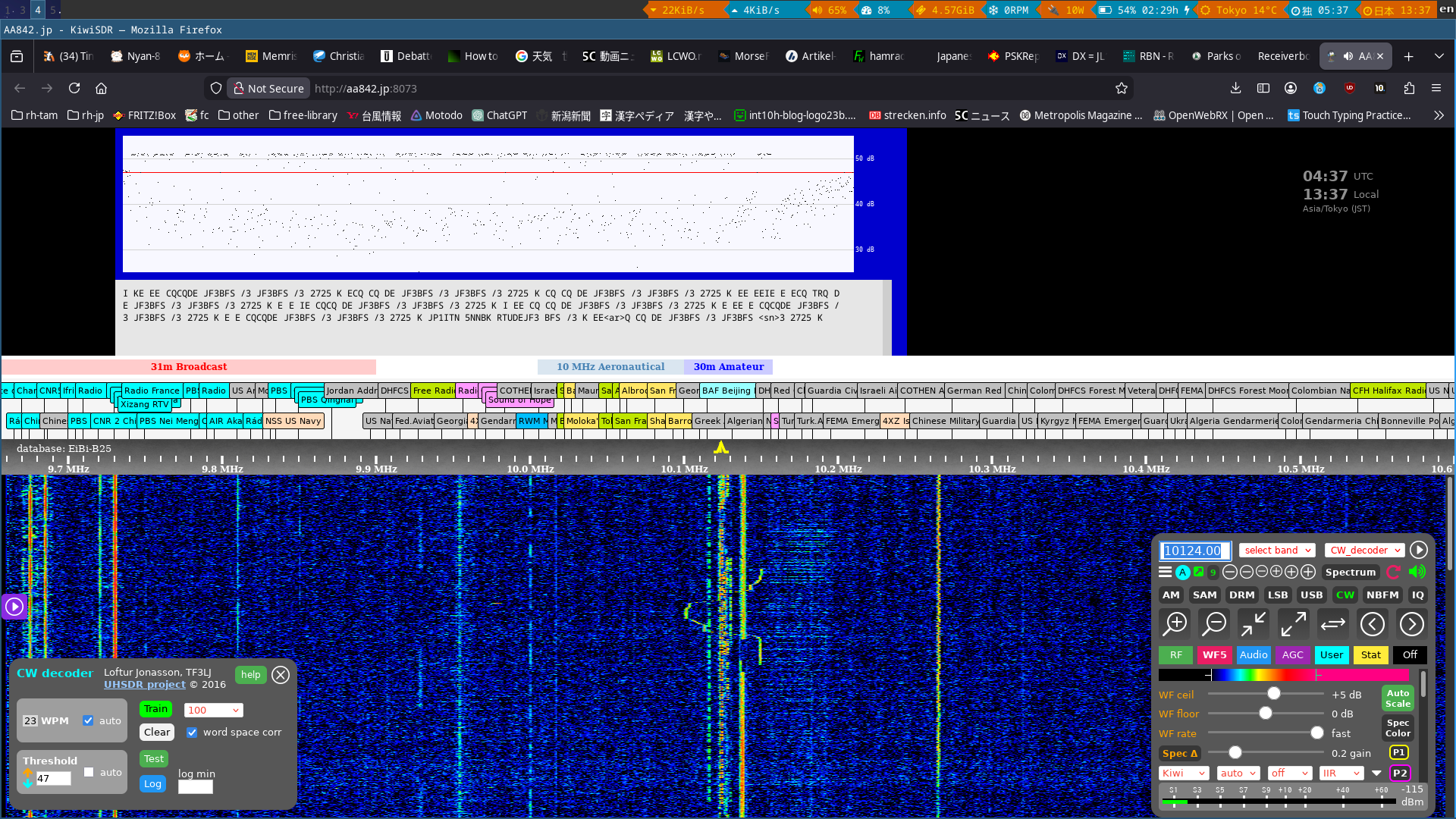
Morse code (aka “Consinuous Wave” ow CW) was the first way of getting messages transmitted via radios. It sounds like just a simple sinus wave, sent out as sequences of short (“dit”) or longer (“dah”) signals. We all know the simple plates where then the alphabet and numbers get defined as sequences of dit’s and dah’s. One can memorize these quite easily, but for real communication one needs to understand them at higher speeds. Learning Morse Code is something between learning a new language, and learning a music instrument - here are details on my endavour.
Also for producing own radio transceivers: for receiving/sending morse code, much simpler transceivers can be used.
You might know the scene around building and using mechanical computer keyboards. In the same way, we have a huge scene for everything to insert Morse Code into the transceiver. To start with, there is a big field of kinds of input: the most traditional device is the ‘straight key’, when pressing it just a simple electrical circuit is closed. It’s also no ergonomic, so better devices like paddles were developed. If I ever get my Morse skills usable, I might reward myself in buying one of these.
Ragchew/normal talking
Of course, you can also put “normal voice” onto the air for talking. This is widely done, and known as “ragchew”.
Getting connections far away: DXing
DXing: When folks have setup radio and antenna, then trying to get as far as possible is another ‘potential goal’. You can enter various counting organizations, compote with others. Try to get contact with as many countries as possible - for example contacts with North Korea are rare. Once you have contacts with all countries, try to get contacts to all of them with Morse Code, with voice, and with digital modes.
To get successful connections with rare countries or areas, sometimes “DX Peditions” are formed: a group of HAMs going to that area for one or two weeks. These are often super expensive, involving flights and ship trips. Often many other HAMs are also chipping in to make the trip possible.
Going out, into nature
POTA, SOTA
What if you live just in a tiny flat like me, and can not put up a big antenna? POTA (Parks On The Air) is an activity for going to a park, making a certain number of connections to others, and getting points/badges awarded. Of course, someone sitting at home and interacting with folks at the parks are also part of this. Then, for SOTA (Summits On The Air), you go to mountains and make connections from there! This brings together so many good things:
- especially for higher frequencies one gets better propagation from summits, so better chances for wider communication
- You get onto the fresh air.
- Tuning fow small radio/antenna/batters (or solar cell) gets important. Also, being able to use Morse Code allows you to use a smaller radio, plus these connections give you more points!
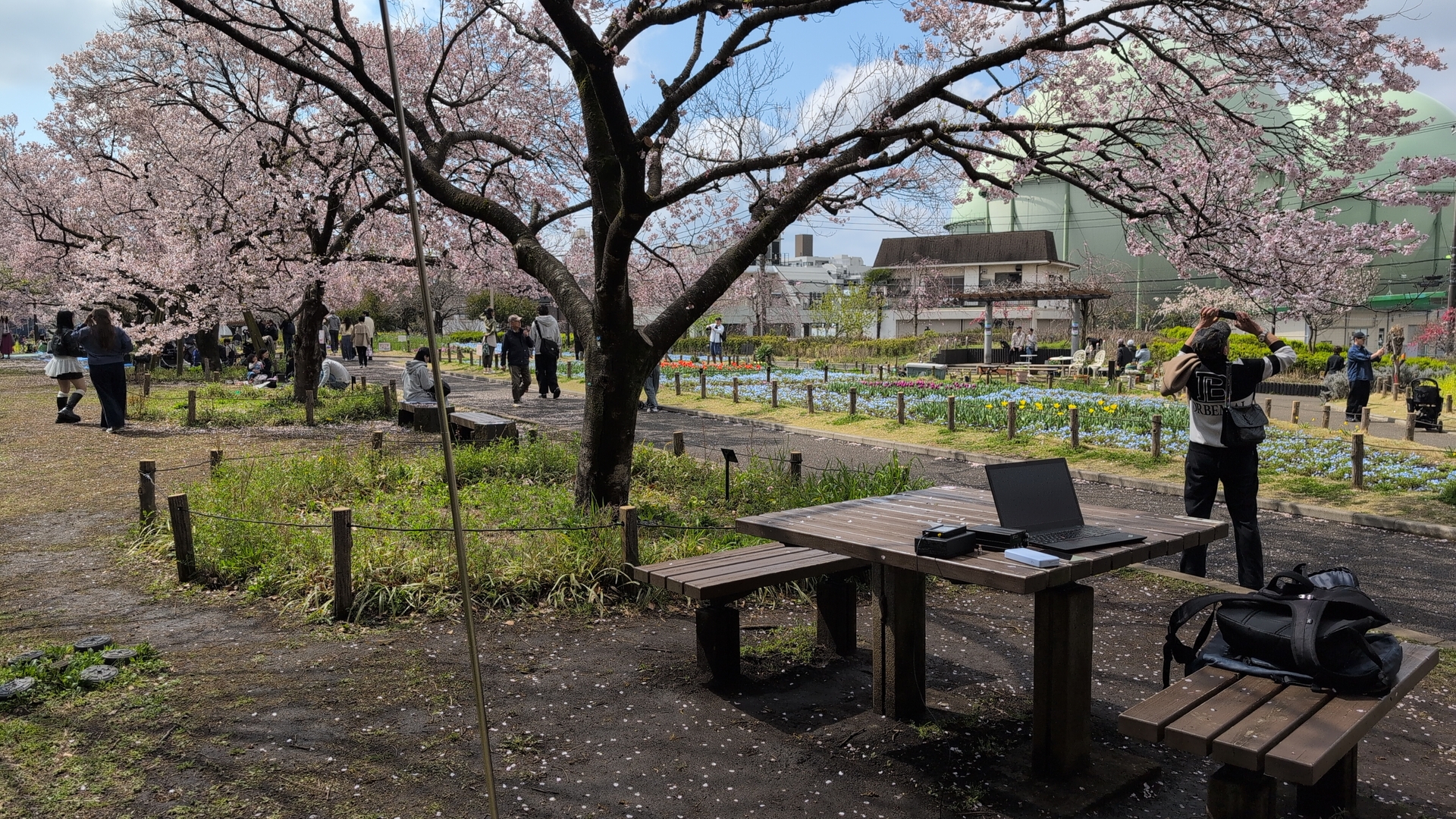
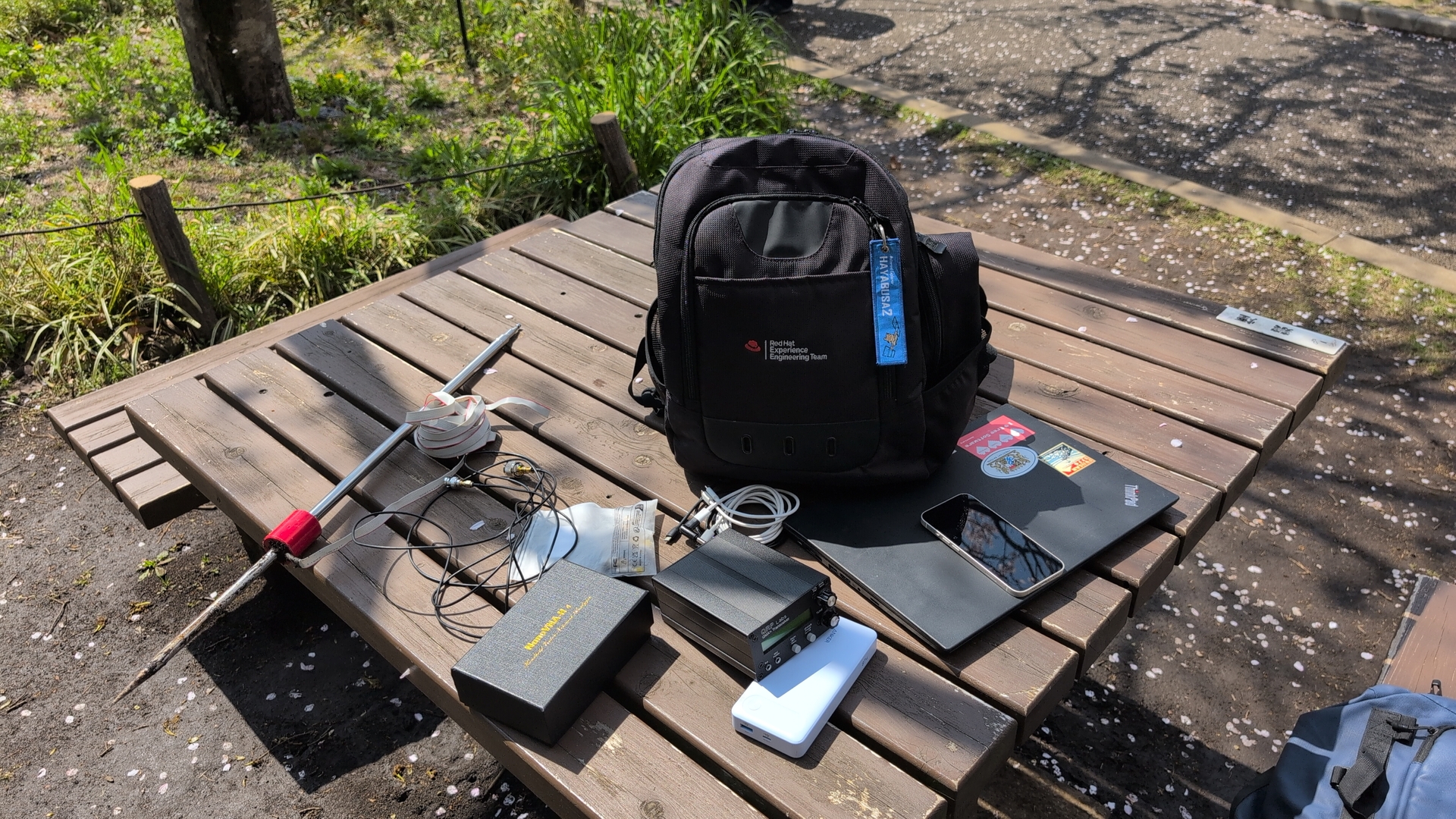
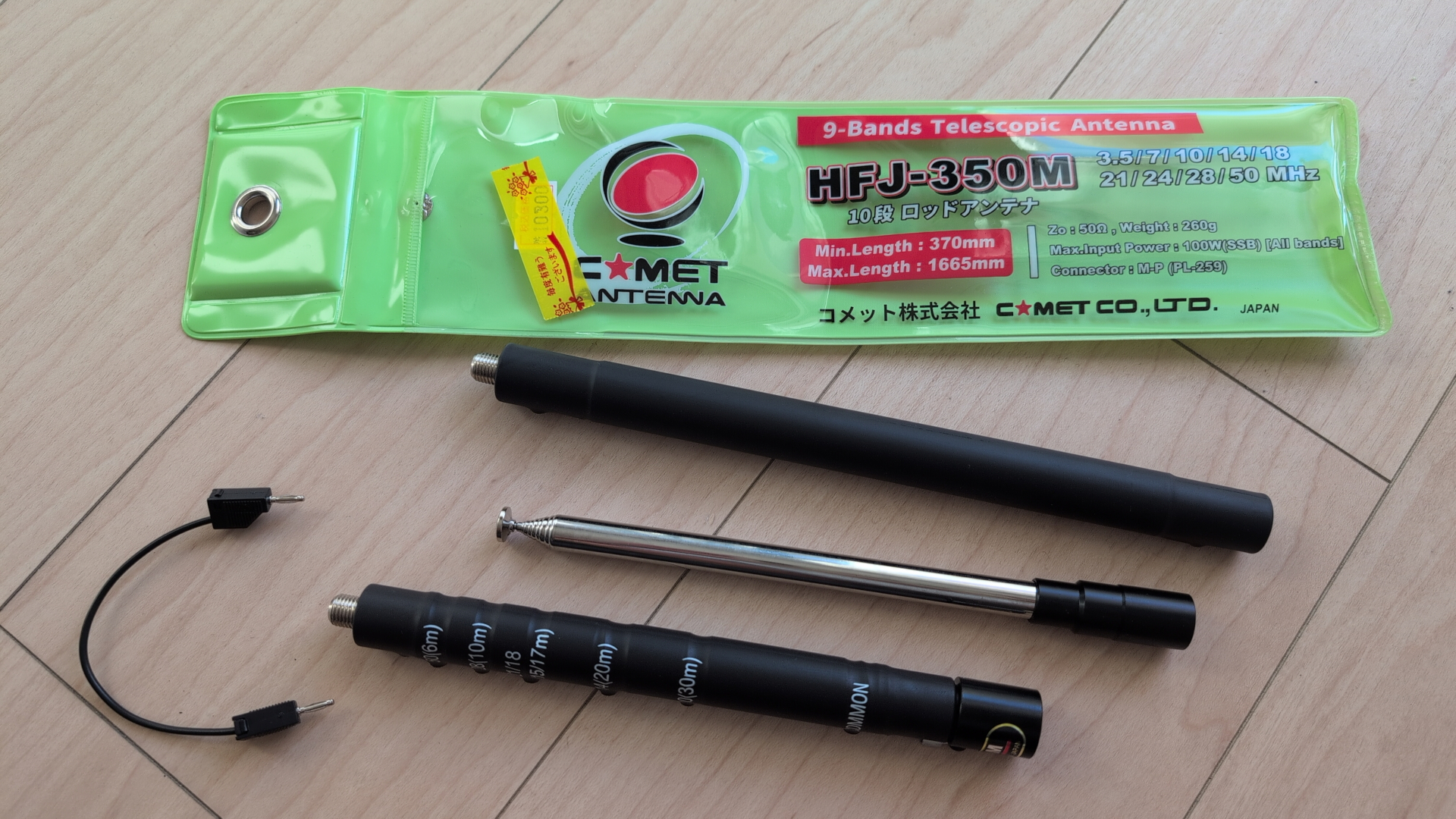
Thomas (K4SWL) has published some great videos which give an idea what POTA is like.
There is also a tradition of sending QSL cards: these are post cards which have the details of a successful communication. In many cases, communications are just “confirmed” online nowadays, but the tradition of sending QSL cards is also still alive.
Foxhunt
Anonther activity: setting up a device like a beacon which is sending out signals (the ‘fox’), and then have others locate the device. This is done with directional antennas, with participants competing on finding the fox first. Page with details, in German: draussenfuchs.de.
Field day
For field day, folks gather on one place, setup equipment, talk with each other and make radio connections. Workshops, bbq’ing, educational classes for others - all potentially included.
Antenna building
I’m fully considering this as an own section. For HAM radio, every country has own rules, for example the frequencies on which HAM’s are allowed to send out radio signals. These “bands” are announced with their frequency or wavelength. And with the amount of power which HAM’s are allowed to send out - this also depends on how much the used antenna is “focusing” the power which the transmitter is putting into the antenna.
Depending on the frequency used for sending out the signal, also the propagation is very different. Also the antennas. For highest frequencies, parabol dishes or horns get used, for the lowest ones long wires. For lower frequencies, also transmission trough the earth is more important.
Low Power operation
To make “as far as possible”-connections, many factors should be considered. Most importantly: antenna and “with how much power the signal is sent to the antenna”. The upper limts are defined by the law regulations and the exact circumstances (i.e. vicinity of other equipment or people).
On the low power end, QRP is a flavour of HAM radio where only low power is used, typically below 5 or 20Watt of energy to be output from the transceiver. This style of communication is putting more emphasis on the antenna. I have only operated QRP so far.
Bouncing communication: Satellite, EME
The higher the frequency, the more it could be compared to light. For example, for the 430Mhz area, it is said that the signal is propagated “line of sight”, plus a tiny bit more, following the curve of earth’s globe. So sending signals from the top of a mountain is allowing the signal to propagate further as we have a better “line of sight”.
Then, depending on many circumstances, signals can also be reflected by the various layers above the earth. Reflection can also happen with the traces left by meteors, or on planes.
Some HAM’s specialize on Earth Moon Earth (EME): they aim at the moon, and work with the reflected signal. This has shifted to a completely new level recently with EVE succeeding.. Earth Venus Earth.
Communication can also happen directly with spacecraft like the international space station, or with satellites receiving the signal and “replaying” it back to the earth.
Data transmission
This is around all kinds of data. For example, to run network protocols over radio signals. Or to receive sensor data from a balloon you are launching. If you have the balloon send out via Wspr procotol, you can have someone else receive the signal and obtain the transmitted data.
HAM’s put all kinds of data onto the air:
- SSTV, slow scan television
- rtty, telewriter
Digital Modes
Morse Code was the first “protocol” to be used over radio waves, then voice communication. Later TeleVision. When the connection between 2 stations is good, then all of these can be used. If a connection is bad, then while voice will no longer work, chances are that you can still use Morse Code to communicate: so the “signal to noise” ration can be lower for Morse Code.
In the last years, also digital modes have spread. These cover something which “machines are sending/receiving”. For example, with the FT8 mode one can transmit even in situations when Morse Code does no longer work. On the other hand, using FT8 also needs equipment like a computer or a smartphone - these get connected to the transmitter and do the sending/receiving/encoding work.
Listening
Sounds boring? Think again..
For starters, everybody can do it via internet access: for example via servers listed at receiverbook.de. That allows you to connect via internet to one of these systems, and then receive data “as of you had an antenna where that system is located”.
Recently, a new number station appeared, with transmissions
sent in Farsi, probably aimed at people located in Iran.
Sites like priyom.org have details on
these, and with receiverbook.de you can “tune into” these
transmissions.
With “The Spectrum Monitor”, there is a whole monthly magazine dedicated to listening. We have folks for example specializing into research of which frequencies are used by Russian ships, and then tracking movements. Same for ships in general: there are global networks dedicated to track ships positions.
We have HAMs who run satellite dishes on rotors, and receive transmissions from satellites. For example cards with weather data.
Most interesting for me..
As for me, when I was young I started using Citizens Band, for communication with others, and because of the “magic of talking with someone over the air”. Learning towards the exam was a great trigger to learn more on the physics. I always wanted to learn an instrument, since last year that was replaced with the goal of learning Morse Code. I was already into hinking - now I have the basic equipment together to do POTA and SOTA.
One of my other areas of interest is Open Source, and it goes nicely together with HAM radio: it’s all about learning, sharing with others, and openness.
If you are curious which parts of the hobby are interesting for some people, I can recommend the QSO today podcast: in every episode, one HAM story are shown.
Finishing this with a great comment about HAM radio which fits really nicely: it’s the Golf sport of the engineers. :)
Corrections? Questions? -> Fediverse thread