I got free time to spend with HAM gear in the middle of Germany, on a house with 3 floors and a garden behind the house. After doing some connections with FT8, a digital mode, I started to wonder: which of the 2 antennas is best? Huge disclaimer: “best” is relative, I’m trying to optimize for “connections to far away stations”, and did just test for the 20m band (~15Mhz).
What to test, and how?
The top three ways of communicating via HAM radio equipment are right now
- Morse Code
- Voice transmission
- Data transmission
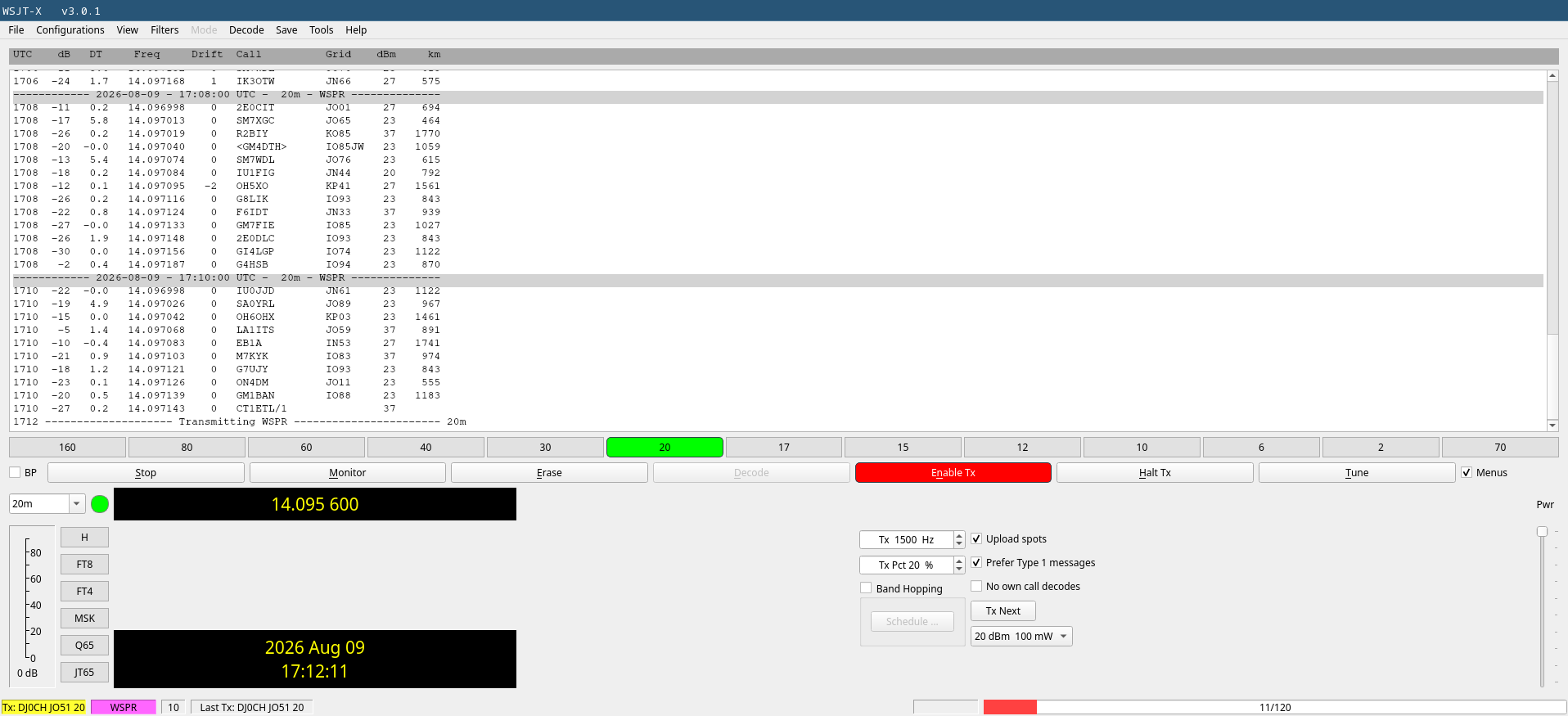
I’m focusing on the third one right now, so I connect a computer or mobile phone to the radio transmitter and have it communicate via digital protocols, a bit like modems over phone lines in the past. I’m using the FT8 protocol. Effectively, one the software I see short messages from others, and send out messages myself.
For the comparisons I use WSPR, pronounced “whisper”, an acronym
for ‘Weak Signal Propagation Reporter’. It is a protocol meant to be
sent out with low power, and to be usable even under bad conditions.
All over the world, HAMs are running setups with configs which listen
to WSPR signals from others, and over the internet the listen reports
are then gathered.
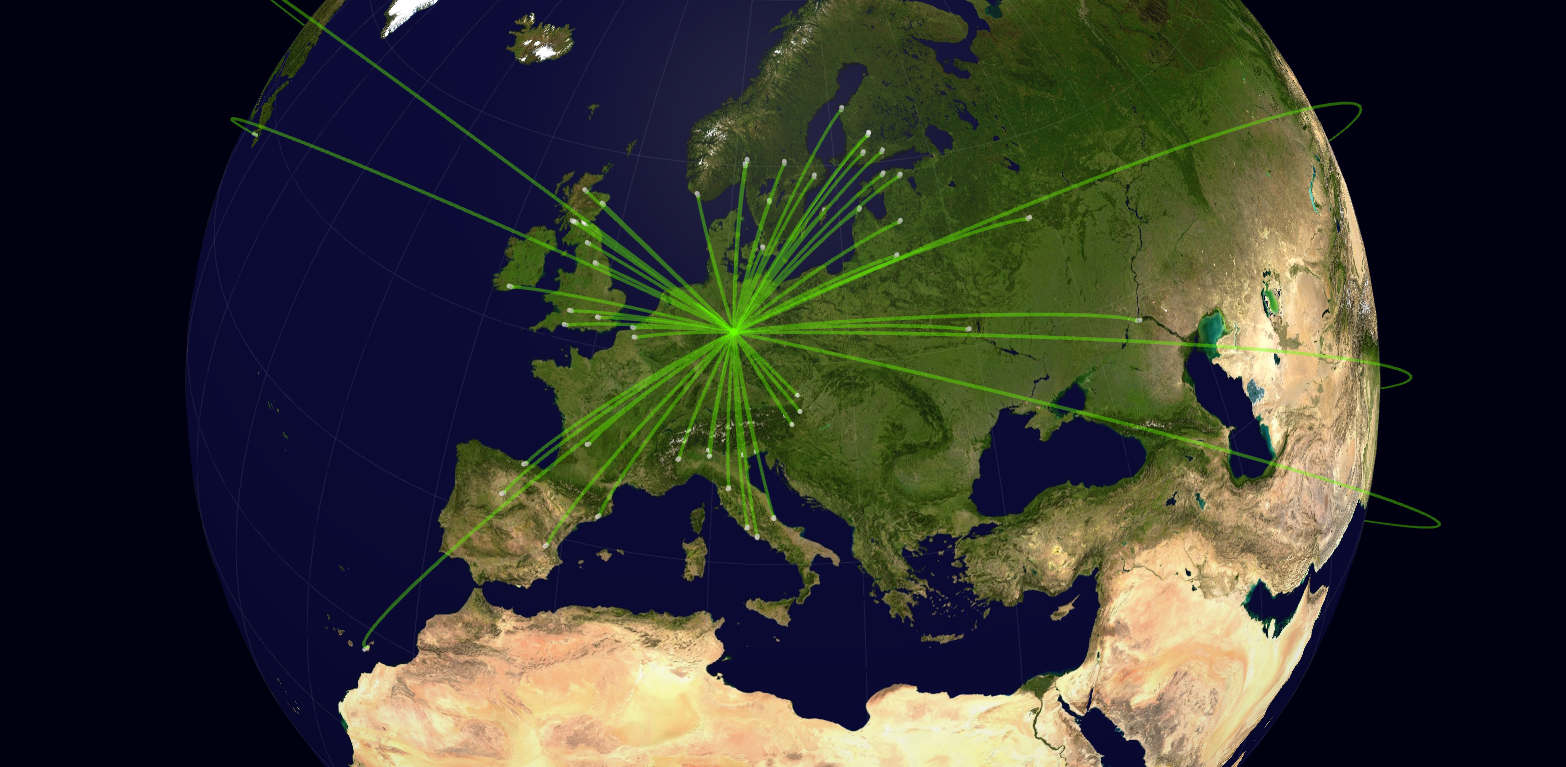
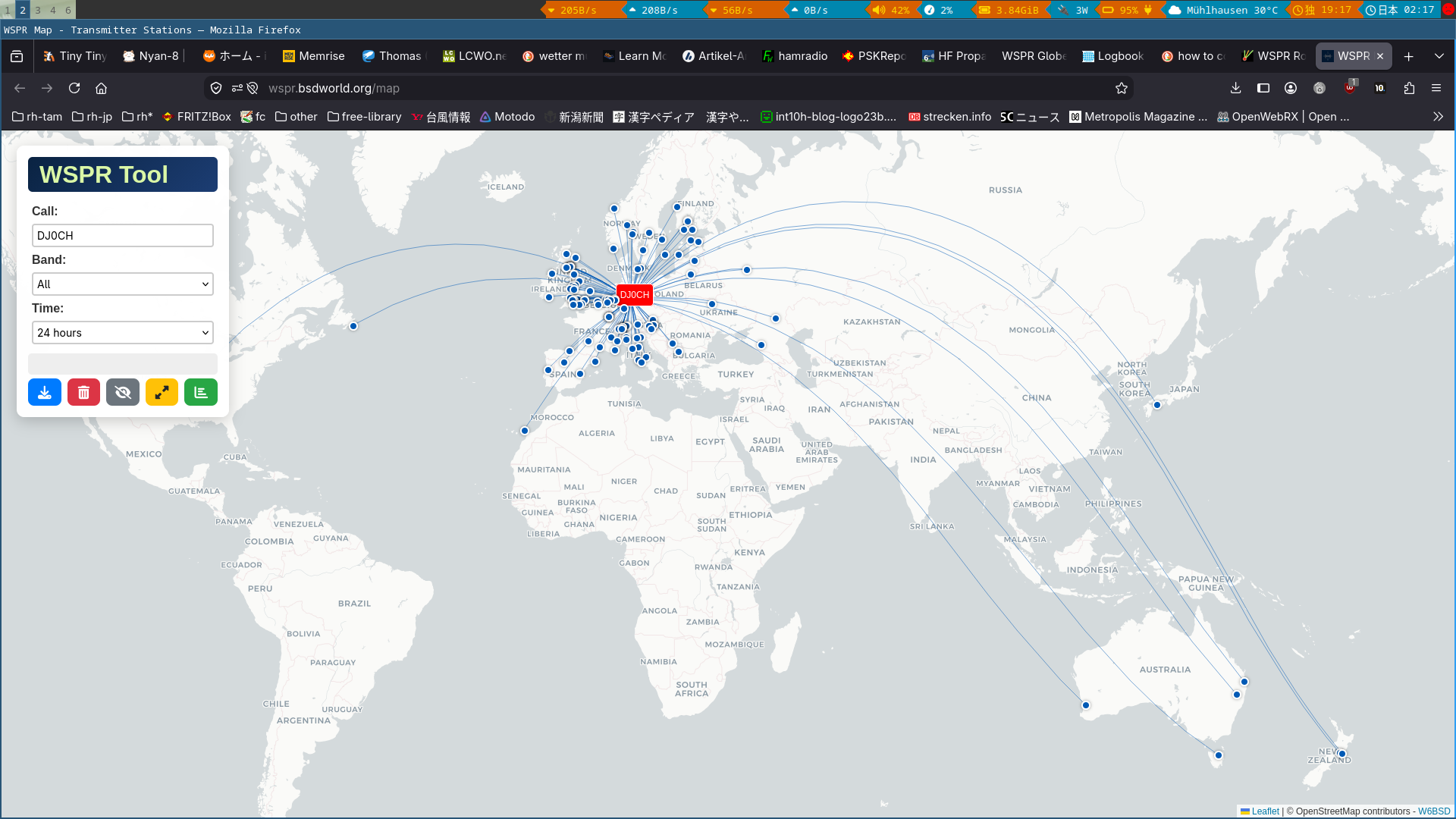
We could use this to compare receive as well as sending capabilities of our setups, but as listening is rather easy, I’m focusing on sending out WSPR for 30min with each configuration, and then compare how I’m getting received. For this comparison, it’s important that the radio wave propagation conditions are stable over all test setups.
The Antennas/scenarios to compare
1: Wire antenna, short counterpoise
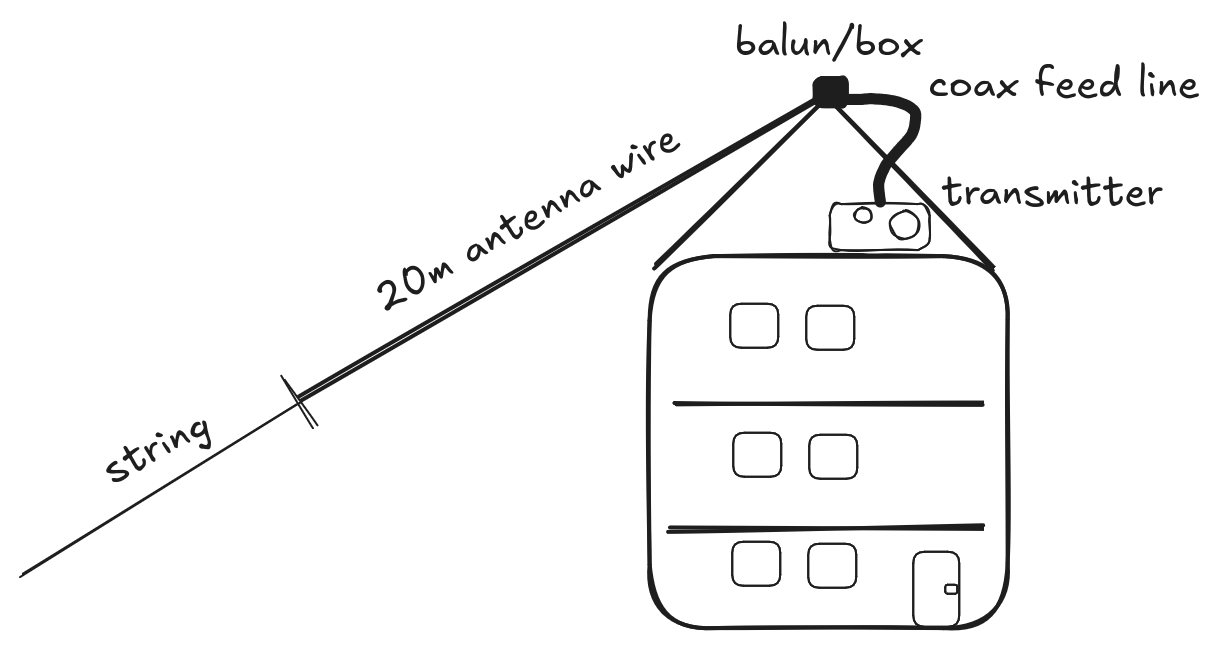
EFHW (End Feed Half Wave) antenna with a long wire and a 1:49 balun, link. EFHW means that the antenna connector (= feed point) is attached to the antenna at one end of the cable, and the cable length is half of the wave length to be transmitted. Additionally, a counterpoise needs to be connected to the antenna. For this scenario, the antenna feed point is at the roof of the house, and the antenna wire is stretched downwards. A string at the end of the wire is tied on in the garden. Not in the graphic: a 2m flexible cable connected to the box/balun, as counterpoise. The wire antenna does not directly allow tuning for a good SWR, for my tests here I had an SWR of 1.5 on the 20m band.
2: Wire antenna, long counterpoise
This setup is identical to the first setup, just a 4m counterpoise is getting used, instead of the 2m one. It’s located on the right side of the roof, while the antenna wire is up on the other side.
3: Comet antenna, long counterpoise
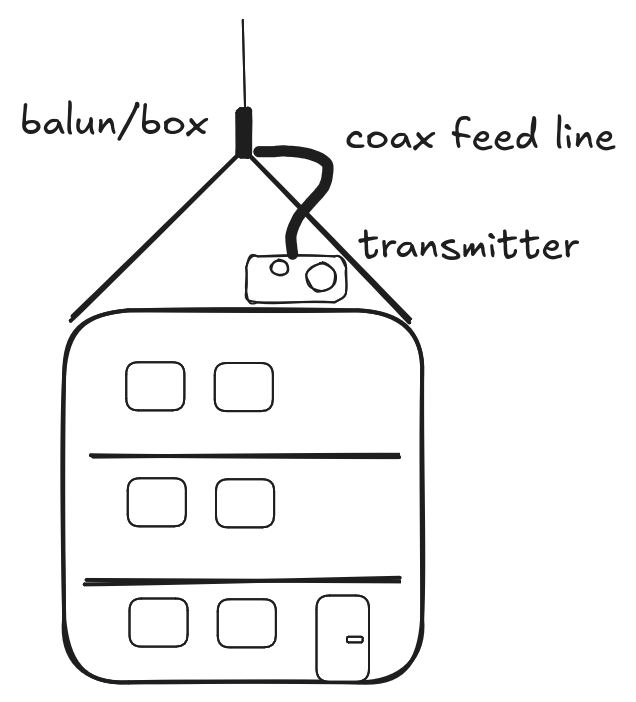
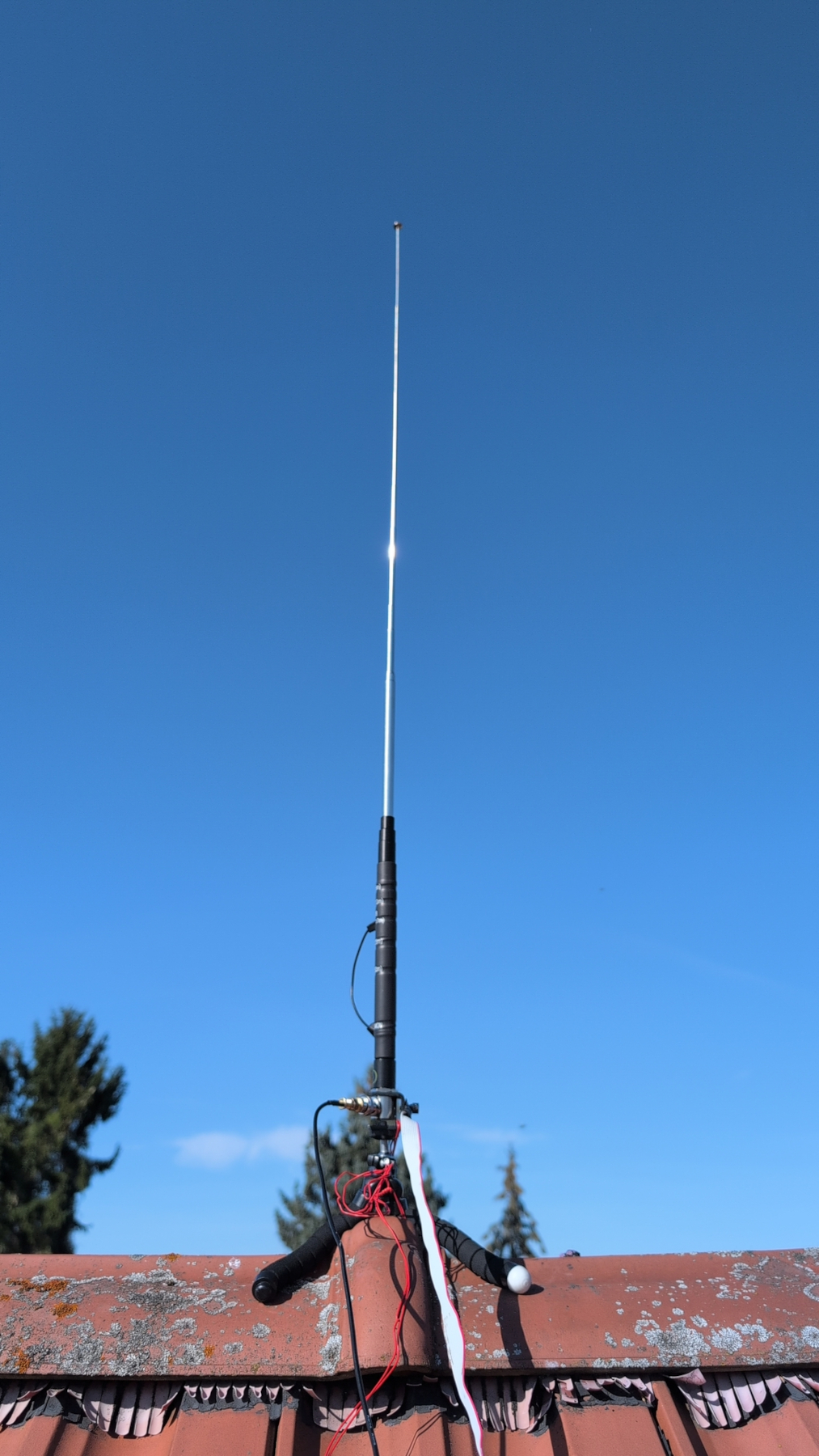
This setup is using the Comet HFJ-350 antenna, attached at the top of the roof. The Comet is a telescope stick antenna, up to 1.2m long. This is a EFQW antenna, End feed Quarter Wave. So quite short, but also covering various bands. The bottom of the antenna contains a coil, electricly ’extending’ the antenna for these bands. Being just quarter wave gives the antenna disadvantage over the half-wave antenna, but then it’s setup higher. The Comet needs tuning for a good SWR, that’s done in selecting the best coil connect point, and then tuning the telescope extension. For the tests here I tuned to SWR 1.1 for the 20m band.
4: Comet antenna below the roof
This setup is like #3, but with the Comet below the roof. Counterpoise again the wide 4m cable which I had obtained when purchasing a 6m telescope antenna. SWR tuned to 2.1 for this setup, I did not get it lower.
5: Comet antenna on middle floor of the house
Seeing also reception for setup #4, I got curious how the Comet would perform from inside the house, at the 2nd floor. This time with just short 2m counterpoise cable, tuned to SWR 1.6.
Tests
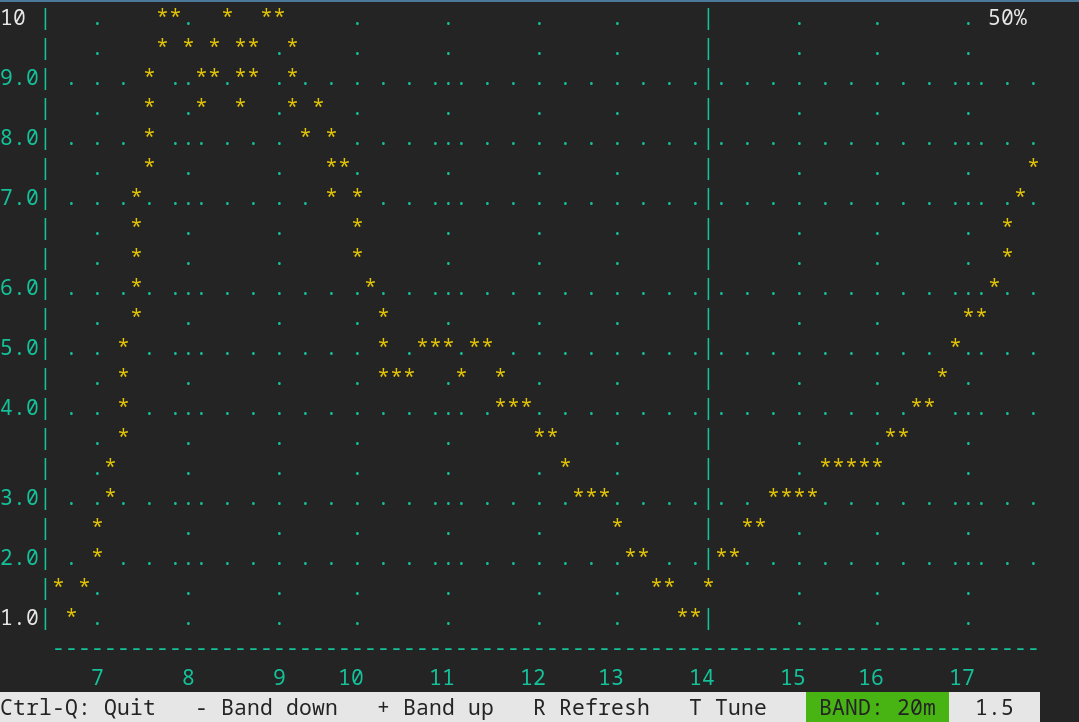
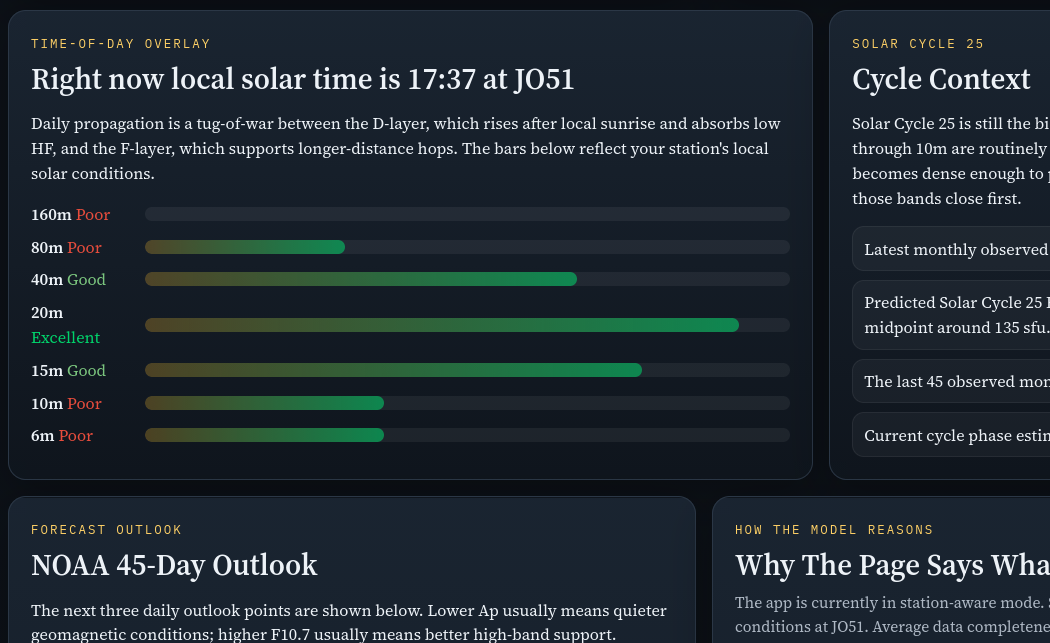
For the tests, I had the wsjtx software send out WSPR for 30min, with 20dbm/100mW. That’s a fraction of the normal 3W/4W which the QMX+ transceiver is outputting, but the 100mW are a typical value for measuring antennas. The propagation conditions of the 20m band were for all 5 tests ’excellent’, according to the HF prop lab page which I’m using.
Results
| Scenario | received # | TX # | rec/run |
|---|---|---|---|
| 1: Wire antenna, short counterp. | 149 | 5 | 30 |
| 2: Wire antenna, long counterp. | 70 | 4 | 18 |
| 3: Comet on roof, long counterp. | 193 | 5 | 39 |
| 4: Comet below roof, long counterp. | 137 | 4 | 34 |
| 5: Comet 2nd floor, short counterp. | 38 | 5 | 8 |
Column ‘received #’ has the number of receive-reports from other stations. I noticed that within the 30min, I had sometimes 4 and sometimes 5 transmissions, that’s reflected in column “TX #”. The last column has then the number of receive reports per single transmission - so that’s the most interesting value.
Let’s not read to much out of this: this is just a back-of-the-envelope comparison. For example, if by coincidence for one of the test runs just a few receiving WSPR reporters were available, also the number of reports would be lower..
Take aways
- Measuring and comparing require a considerable amount of effort. Even with WSPR and a network of HAMs constantly receiving WSPR and offering the data - that helps greatly!
- I can’t make sense from getting for scenario 2 fewer receive reports than for scenario 1. I expected the hand soldered/crimped short counterpoise would be worse than the long one. Needs more research.
- The Comet performs better than the wire antenna. As expected, the Comet below the roof is worse than ontop of the roof, but not much: below the roof got 87% of the receive reports of over the roof. I might consider a stationary deployment, but I also need another radio transceiver then.
- Even with the Comet deployed inside the house we got receive reports!

Corrections? Questions? -> Fediverse thread